

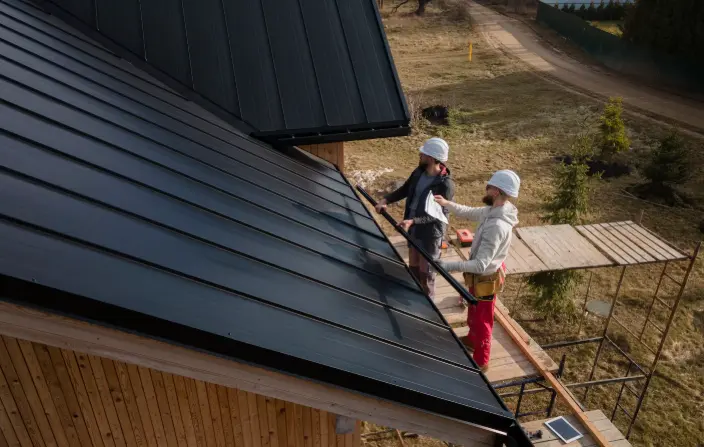
Choosing a roof starts before materials or color. Shape and structure decide how the roof handles water, snow, wind, heat, and time. Many leaks and failures blamed on shingles actually come from wrong form, wrong pitch, or weak structure. A good roof is planned as a system, not as a surface.
Roof Shape Defines Performance
Roof shape controls how water and snow move. Sloped roofs shed moisture naturally and reduce long-term stress. Flat and low-slope roofs can work, but only with perfect drainage and regular maintenance. Gable roofs are simple and reliable, hip roofs perform better in high winds, shed roofs suit modern layouts but need careful waterproofing. The wrong shape rarely fails fast, but it ages badly.
Pitch Is A Functional Choice
Pitch affects drainage speed, ventilation, and which materials are even possible. Low pitch increases water exposure and limits options. Steeper pitch improves runoff and airflow but costs more to build and maintain. Snow-heavy areas benefit from steeper slopes, hot climates benefit from pitch that supports ventilation. Pitch is about performance first, appearance second.
Structure Carries The Load
The roof covering is not the roof. Rafters, trusses, and beams carry weight from snow, wind, and materials. If the structure is undersized or aging, problems like sagging and cracking appear even when the surface looks fine. Heavier roofing materials require stronger framing, and skipping this check causes long-term damage.
Ventilation Is Not Optional
A roof without ventilation traps heat and moisture. That leads to ice dams, mold, faster material wear, and higher energy costs. Proper airflow through soffits, attic space, and ridge vents keeps temperatures balanced and moisture moving out. Missing one part breaks the whole system.
Drainage Design Prevents Leaks
Most leaks start where water slows down or changes direction. Valleys, edges, penetrations, and transitions are the weak points. Simpler roof shapes leak less because they create fewer intersections. Good design guides water away cleanly instead of forcing flashing to do all the work.
Climate Should Decide Everything
Roof design must match local weather. Snow load, rainfall, wind, sun exposure, and temperature swings all matter. A design that works perfectly in one region can fail quietly in another. Choosing based on trends instead of climate shortens roof life.
Roof Design Affects Energy Use
Roof shape and structure influence insulation effectiveness and airflow. Poor design creates hot attics, cold ceilings, and constant HVAC strain. Energy problems often trace back to early roof decisions, not insulation alone.
Simple Roofs Last Longer
Complex roofs look impressive but create more failure points. Simple forms with consistent slopes and clear drainage are easier to maintain and cheaper long-term. A roof doesn’t need to stand out. It needs to survive.
A Roof Is A System Not A Product
Choosing a roof means choosing how shape, pitch, structure, ventilation, and drainage work together. When they align, the roof becomes invisible and reliable. The best roof is the one you stop thinking about after it’s built.
Picture Credit: Freepik